
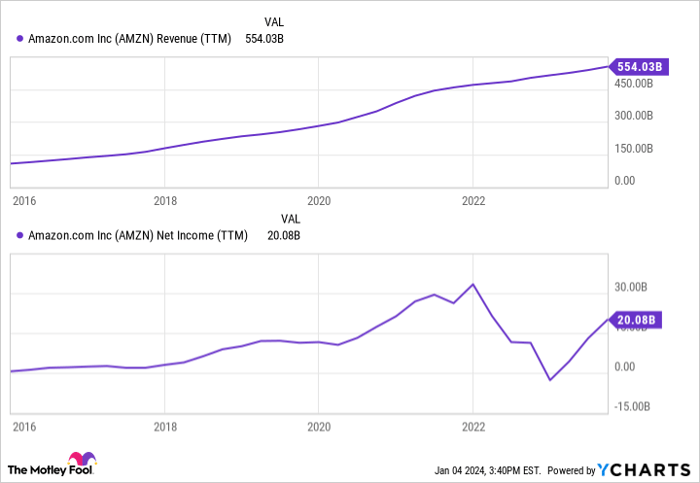
Back in 2014, when China’s e-commerce giant Alibaba went public, investors were optimistic, seeking the next Amazon-style success. Over the past decade, Alibaba stock delivered considerable gains, much like Amazon since its IPO in 1997. However, in recent years, while Amazon stock continued to thrive, Alibaba has faced a downturn, nearing a record low after overcoming the 2022 bear market.
So, what’s the deal? Is Alibaba’s weakness an opportunity to invest, or should Amazon remain the top choice?
The answer is complex, and somewhat philosophical.
The Differing Operational Environments
On the surface, Amazon and Alibaba appear similar. Both are e-commerce giants with cloud computing services, digital entertainment, and logistics management. However, the difference lies in the markets where these companies operate.
Amazon generates most of its revenue from North America, a market with relatively soft regulatory oversight, where consumers prioritize convenience over privacy concerns. On the other hand, Alibaba primarily operates in China, facing tougher regulations and a more restrictive business environment. China’s recent regulatory crackdown on technology giants, including Alibaba, has further compounded the challenges.
Despite Alibaba’s efforts to adapt, including leadership changes and organizational restructuring, the regulatory environment continues to pose a significant obstacle to its growth. Additionally, the emergence of PDD Holdings as a strong competitor in China’s e-commerce market has added to Alibaba’s difficulties.
In contrast, Amazon continues to expand its business, with high-margin ventures in cloud computing and digital advertising. The integration of its various operations, including e-commerce, delivery services, and advertising, seems seamless, without facing significant legal or social challenges.
Perseverance and Challenges
While the challenges faced by Alibaba may not be permanent, they persist, impacting the company’s performance. Recent weaknesses in Alibaba’s stock can be attributed to COVID-19-related lockdowns in China, affecting the country’s economy. However, with retail spending showing signs of recovery, the stock’s underperformance may present an opportunity to tap into China’s growing consumer market.
Despite the obstacles, Alibaba remains a fundamentally strong company, with projected revenue and profit growth. The current consensus price target for Alibaba shares is significantly higher than their present price, indicating potential upside for investors.
Amazon: A Safer Bet than a Niche e-Commerce Stock?
Investors weighing between the advantages of investing in a niche e-commerce stock and Amazon have been presented with a stark contrast in terms of risk and potential upside. While the smaller stock has experienced a substantial decline in value, pundits assert that it presents a compelling opportunity for savvy investors. Indeed, the sentiment is that one could do worse than considering this risk-versus-reward scenario.
In comparison, Amazon remains the more favored choice for investors, primarily owing to tangible and intangible factors. The dynamics here center on Amazon’s inherent strengths and a business model that positions it as a robust and resilient investment option within the online retail landscape.
Accounting for Regulatory Risks
The recent upheaval in the e-commerce sector sheds light on a broader takeaway for prospective investors. Namely, the significance of including a company’s operating environment and regulatory risks in the due diligence process. While these aspects are often sidelined, it is becoming increasingly clear that these unseen factors can have far-reaching implications and, if not carefully considered, may come back to haunt investors.
Market Insights
Analysts have underscored the importance of market knowledge and up-to-date insights when making investment decisions. In the current landscape, where operational and regulatory risks are of paramount importance, the broader financial community is being advised to pay heed to these critical factors, which could make or break investment portfolios.
Expert Recommendations
Seasoned market experts advocate for a cautious approach that takes into account a company’s competitive landscape, coupled with its market understanding. This approach is likely to yield a more informed perspective, and investors should give due consideration to the philosophy underlying this guidance.
Evaluating Investment Options
The primary consideration for investors is to weigh the overall risk and reward associated with their investment decisions. Making informed choices often includes evaluating a company’s positioning within the market, regulatory risks, and its potential for growth and stability. In doing so, investors can develop a more comprehensive understanding of the investment landscape and the factors that drive it.
John Mackey, former CEO of Whole Foods Market, an Amazon subsidiary, is a member of The Motley Fool’s board of directors. James Brumley has no position in any of the stocks mentioned. The Motley Fool has positions in and recommends Amazon. The Motley Fool recommends Alibaba Group. The Motley Fool has a disclosure policy.
5 Stocks Our Experts Predict Could Double In the Next Year
By submitting your email, you'll also get a free pivot & flow membership. A free daily market overview. You can unsubscribe at any time.